

Case Overview
A Dallas-area insurance carrier flagged a workers’ compensation claim that had been active for several months. The claimant, a construction trade worker, had filed for disability benefits citing a physical injury that supposedly prevented him from performing any form of manual labor. On paper the claim appeared straightforward — benefits paid, medical documentation submitted — but the carrier had questions the paperwork could not answer. A field referral was made to Terrance Private Investigator and Associates, and what our licensed investigators documented across three surveillance sessions in the Dallas 75214 area did not require interpretation.
The Challenge
The carrier had been paying workers’ compensation benefits for several months following a reported job-site injury. The medical documentation cited significant limitations — an injury to the back and shoulder that the claimant’s physician indicated prevented any strenuous physical activity, lifting, or manual labor. Something had triggered an internal review flag, and desk-based review had reached the limit of what it could produce. The carrier faced several obstacles:
- A claim citing a back and shoulder injury that supposedly prevented all manual labor
- Benefits paid for several months on documentation that appeared consistent on paper
- An internal review flag that desk-based investigation could not resolve
- A need for independent, licensed field documentation to confirm or challenge the claim
3
Surveillance Sessions
48 Hours
To Field Deployment
5 Days
To Evidence Delivery
75214
Dallas ZIP Documented
The Investigation
Three sessions in the Dallas 75214 area. Every observation from a legally permissible public position. Every session documented.
A licensed investigator was deployed to conduct covert mobile surveillance anchored to the claimant’s known daily patterns. All field operations were conducted in compliance with Texas Occupations Code Chapter 1702 — from legally permissible public observation positions, without trespass, and without any contact or interaction with the subject.
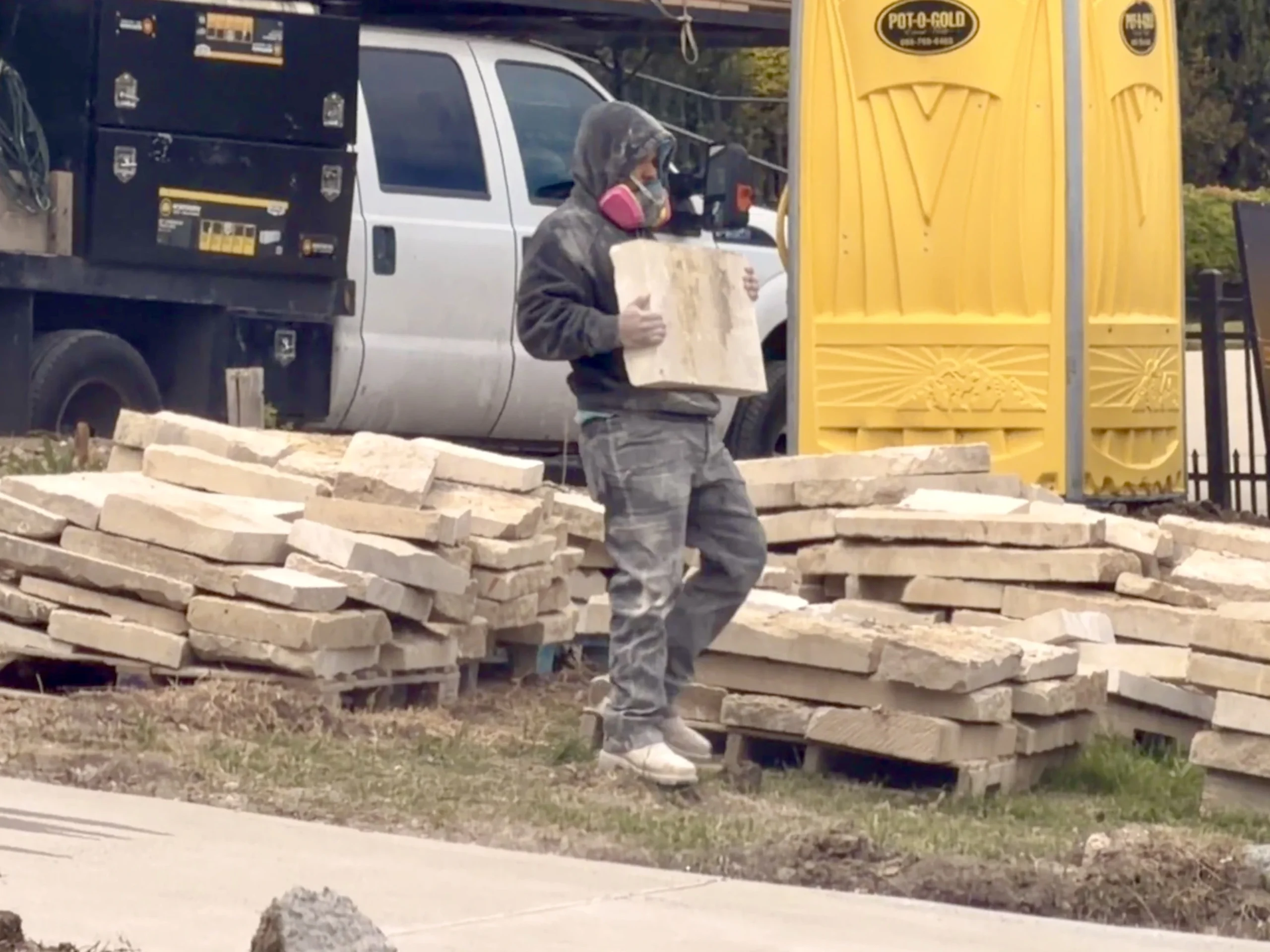
Session Two produced the photograph. The claimant was captured mid-stride on an active Dallas construction site wearing a respirator and work gloves, carrying a large limestone paver held against his body with both arms — requiring the exact physical capability his workers’ compensation claim stated he had lost.
The breakthrough was not complicated. It did not require sophisticated analysis or complex evidentiary argument — it required a licensed investigator in a legally permissible public position with a camera and the patience to wait for what the claimant’s own behavior would eventually produce.
The third session established the documented behavior as a repeating pattern, not an isolated incident: regular departure from the Dallas 75214 residential address to an active construction site, sustained physical labor, and consistent work gear documented across the full session.
The Results
The complete evidence package was delivered to the insurance carrier within five business days of the final surveillance session:
- Three session observation logs with precise dates, times, and confirmed locations
- Timestamped photographic documentation, including the Session Two limestone-paver photograph
- Video documentation of the claimant’s movement and activity across multiple sessions
- A structured investigative report formatted for claims review and any legal proceedings
The claim documentation said he could not work. The surveillance documentation showed exactly what he was doing instead.
Terrance Private Investigator & Associates
Looking Ahead
If you are an insurance carrier, third-party administrator, or self-insured employer in Dallas facing a workers’ compensation claim that does not add up, a licensed private investigator can deliver the independent, court-ready field documentation your claims review needs. Suspected fraud does not resolve itself — clarity begins with documented fact, not paperwork alone.